
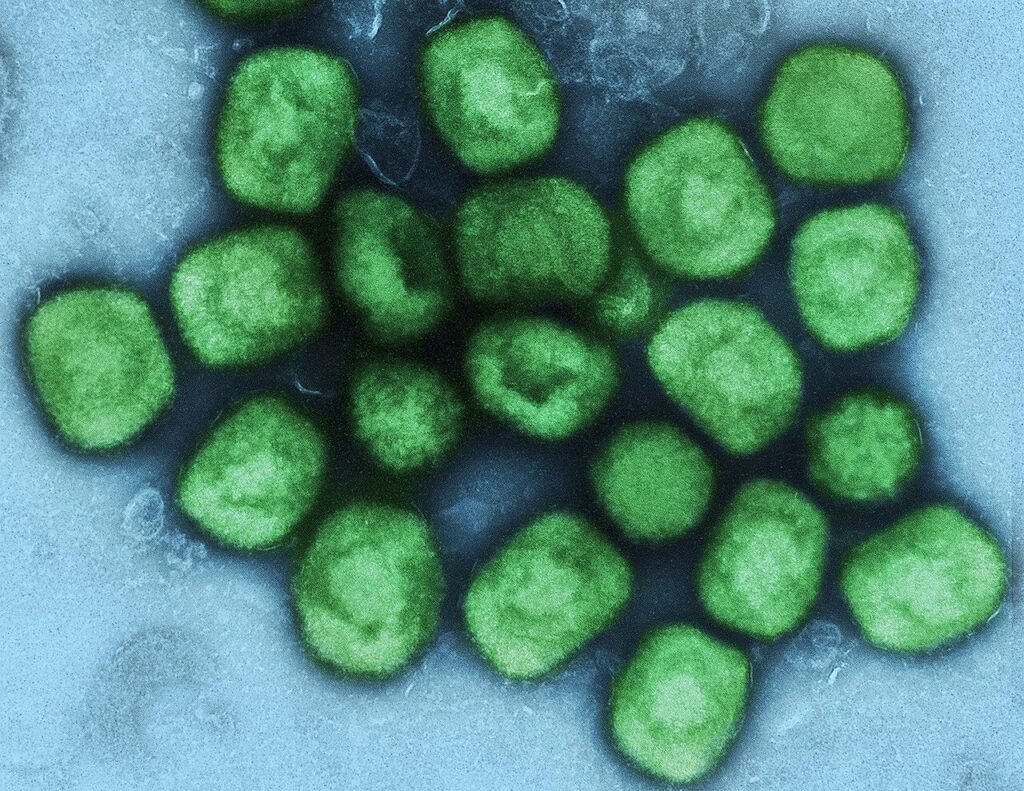
Mpox, formerly known as monkeypox, is a viral infection caused by the monkeypox virus. It causes a painful rash, fever and swollen lymph nodes. The virus was first identified in humans in 1970, and Nigeria has reported cases since 2017. Most people recover in two to four weeks, but mpox can be severe in young children, pregnant women and people with weakened immune systems.
Key facts
- Mpox spreads through close contact with an infected person, animal or contaminated materials.
- There are two main types of the virus, clade I and clade II. Nigeria’s cases have been clade II.
- Symptoms usually start 3 to 17 days after exposure.
- Vaccines are available and recommended for people at high risk.
- People with mpox should isolate until all skin lesions have healed.
How mpox spreads
Between people
- Skin-to-skin contact with the rash or scabs, including during sex
- Face-to-face contact, through respiratory droplets during prolonged close contact
- Touching contaminated bedding, towels or clothing
- From mother to baby during pregnancy or birth
From animals
People can be infected through bites or scratches, or by hunting, skinning or eating infected wild animals such as rodents and monkeys.
Symptoms
- A rash that may start on the face, hands, feet, mouth or genitals. Spots go through stages: flat, raised, fluid-filled, pus-filled, then crust and fall off.
- Fever
- Swollen lymph nodes
- Headache, muscle and back aches
- Low energy
- Sore throat
The rash can be very painful, especially in the mouth, anus or genitals. Some people have only a few spots.
Complications
- Skin infections and scarring
- Pneumonia
- Eye infection, which can affect vision
- Dehydration from mouth sores or vomiting
- Severe disease in people with untreated HIV
Diagnosis
A health worker will take a swab from a skin lesion, which is tested by PCR. Mpox can look like chickenpox, herpes or syphilis, so testing is important. People diagnosed with mpox should also be offered an HIV test.
Treatment
Most people recover with supportive care:
- Paracetamol for fever and pain
- Drinking plenty of fluids and eating well
- Keeping skin lesions clean and dry, and not scratching or popping them
- Salt-water rinses for mouth sores
- Warm baths or sitz baths for painful genital or anal sores
Antiviral medicines such as tecovirimat have been used for severe cases, although recent trials showed limited benefit for clade I and clade II disease. Treatment decisions are made by specialists.
Preventing the spread
- Isolate at home or in hospital until all scabs have fallen off and new skin has formed.
- Cover lesions and wear a well-fitting mask around others.
- Do not share bedding, towels, clothing or utensils. Wash them in hot water with detergent.
- Avoid sex while you have symptoms, and use condoms for 12 weeks after recovery as a precaution.
- Wash hands often with soap and water or use alcohol-based hand rub.
- Avoid contact with wild animals and do not eat bushmeat that has not been thoroughly cooked.
Vaccination
WHO recommends mpox vaccination for people at high risk of exposure, including close contacts of cases, health workers at risk, and people with multiple sexual partners in affected communities. Vaccination is most effective before exposure but can also help if given within four days of contact. Ask your local health authority about availability in your area.
When to see a doctor
See a health worker if you develop an unexplained rash with fever or swollen glands, particularly after contact with someone who has mpox. Seek urgent care if you have eye pain or blurred vision, difficulty breathing, confusion, inability to drink, or if a baby or pregnant woman develops symptoms.
Frequently asked questions
Is mpox the same as chickenpox?
No. They are different viruses. Mpox often causes swollen lymph nodes and a rash concentrated on the face, palms, soles or genitals, while chickenpox spots appear in crops mainly on the body.
Can mpox be cured?
Most people recover completely without specific treatment, although scarring is possible.
Why was the name changed?
WHO renamed the disease mpox in 2022 to reduce stigma and because the virus is mainly found in rodents rather than monkeys.


