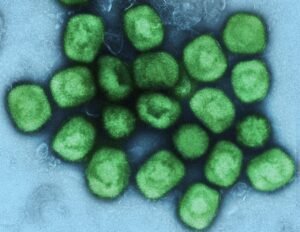
Chickenpox is a very contagious infection caused by the varicella-zoster virus. It causes an itchy rash of spots that turn into fluid-filled blisters and then scab over. Most children recover within one to two weeks with simple home care, but chickenpox can be more serious in babies, adults, pregnant women and people with weakened immune systems.
Key facts
- Symptoms start 10 to 21 days after exposure.
- People are infectious from about two days before the rash until all spots have crusted over.
- Most people have chickenpox only once.
- The virus stays dormant in the body and can reactivate years later as shingles.
- A safe vaccine is available, although it is not yet part of Nigeria’s routine schedule.
How chickenpox spreads
The virus spreads through droplets in the air from coughs and sneezes, and by touching the fluid from blisters. People with shingles can also pass the virus to people who have never had chickenpox, through contact with the shingles blisters.
Symptoms
- Mild fever, tiredness and loss of appetite a day or two before the rash
- Small spots, often starting on the chest, back, face and scalp and spreading to the rest of the body
- Spots that turn into itchy, fluid-filled blisters, then burst and crust over
- New crops of spots appearing over several days, so spots at different stages are seen together
On brown and black skin, spots may look darker than the surrounding skin rather than red, and can leave dark marks that fade over time.
Home care
- Give paracetamol for fever and discomfort.
- Do not give ibuprofen unless advised by a doctor, because it may increase the risk of serious skin infections in chickenpox.
- Do not give aspirin to children, because it is linked to Reye’s syndrome, a rare but serious illness.
- Drink plenty of fluids.
- Use calamine lotion or cooling gels on itchy spots. An antihistamine from a pharmacy can help itching and sleep.
- Keep fingernails short and consider cotton gloves at night to reduce scratching and scarring.
- Dress in loose cotton clothing and bathe in lukewarm water.
- Stay away from school, work and vulnerable people until all spots have crusted over, usually about five days after they appear.
Antiviral treatment
Doctors may prescribe the antiviral medicine aciclovir for adults, teenagers, pregnant women, newborns and people with weakened immune systems, ideally within 24 hours of the rash appearing. It can reduce severity.
Complications
- Bacterial skin infection of the blisters, causing red, hot, painful skin
- Pneumonia, especially in adults and smokers
- Inflammation of the brain (encephalitis), rarely
- Serious illness in newborn babies
- In pregnancy, a risk of complications for the mother, and, rarely, birth defects if infection occurs in the first 20 weeks
Shingles
After chickenpox, the virus stays inactive in nerve cells. Later in life it can reactivate as shingles, a painful rash on one side of the body, often a band around the chest or waist. Shingles is more common in older adults and people with weakened immunity, including those living with HIV.
Vaccination
The varicella vaccine is given as two doses and prevents most cases of chickenpox and nearly all severe cases. It is available privately in Nigeria. It may be recommended for health workers and people in close contact with those at high risk who have never had chickenpox. It is not given during pregnancy.
When to see a doctor
Contact a health worker if:
- You are an adult, pregnant, or have a weakened immune system, and have chickenpox or have been exposed to it
- A newborn baby has chickenpox
- Skin around the blisters becomes red, hot, swollen or painful
Seek emergency care for difficulty breathing, chest pain, a stiff neck, severe headache, confusion, fits, or a rash that bleeds or looks like bruising.
Frequently asked questions
Can you get chickenpox twice?
It is rare. Most people are immune for life after one infection.
Does chickenpox leave scars?
Most spots heal without scars. Scratching and infection make scarring more likely.