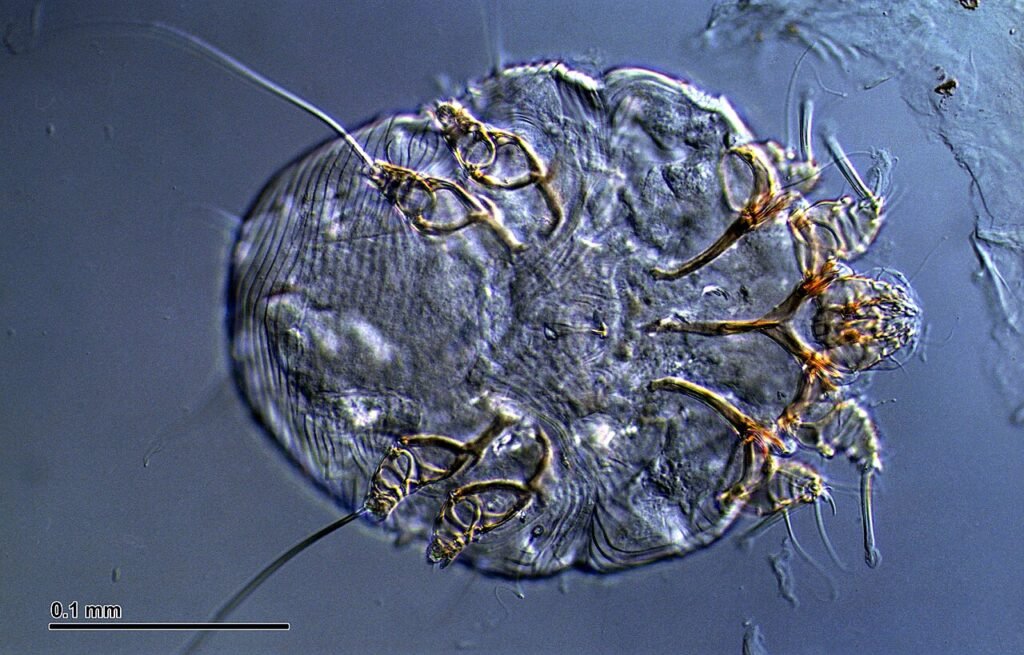
Scabies is a skin condition caused by tiny mites that burrow into the skin and lay eggs. It causes intense itching, especially at night, and a rash. Scabies spreads easily through close skin-to-skin contact, so it often affects whole families, boarding schools and crowded homes. It is not a sign of being dirty. With the right treatment for everyone in close contact at the same time, it can be cleared completely.
Key facts
- Scabies is caused by the mite Sarcoptes scabiei.
- Itching is often worse at night.
- Symptoms can take up to 6 weeks to appear after a first infection.
- Everyone in the household and close contacts must be treated at the same time, even without symptoms.
- Scratching can cause skin infections, which can lead to kidney and heart complications.
How it spreads
- Prolonged skin-to-skin contact, such as sharing a bed, caring for children, or sexual contact
- Less often, sharing clothing, towels or bedding
- Crowded living conditions, schools, care homes and prisons
Pets do not spread human scabies.
Symptoms
- Intense itching, worse at night or after a hot bath
- A rash of small raised spots, often in lines
- Tiny wavy lines (burrows) on the skin
- Common places: between the fingers, wrists, elbows, armpits, waist, buttocks, genitals, and around the nipples in women
- In babies and young children: the palms, soles, head, face and neck
On darker skin, the rash may look dark brown, grey or purple rather than red.
Crusted scabies
A severe form with thick crusts containing large numbers of mites, seen in people with weakened immune systems or older people. It is very contagious and needs specialist treatment.
Diagnosis
A health worker can usually diagnose scabies by looking at the rash and asking about itching in other household members. Sometimes a skin scraping is examined under a microscope.
Treatment
- Permethrin 5% cream is the most commonly used treatment. Apply it to the whole body from the neck down (including the scalp and face in babies and older people), paying attention to skin folds, between the fingers and toes, under the nails and the genitals. Leave it on for 8 to 12 hours, usually overnight, then wash off. Repeat after 7 days.
- Benzyl benzoate lotion is another option available in Nigeria, but it can sting and is not suitable for young babies without dilution. Follow the health worker’s instructions.
- Ivermectin tablets may be prescribed, especially for crusted scabies or outbreaks, but not for young children or pregnant women.
- Treat everyone in the household and close contacts at the same time.
- Treat itching with antihistamines or soothing creams. Itching can continue for 2 to 4 weeks after successful treatment; this does not mean treatment failed.
- Antibiotics if scratched skin becomes infected.
Cleaning the home
- On the day of treatment, wash clothes, towels and bedding used in the past 3 days in hot water and dry in the sun, or iron them.
- Items that cannot be washed can be sealed in a plastic bag for at least 3 days, as mites die away from the skin.
- You do not need to fumigate the house.
Avoid harmful remedies
Do not use kerosene, petrol, bleach, insecticides meant for crops, or other harsh chemicals on the skin. They cause burns and poisoning and do not reliably kill mites.
When to see a doctor
See a health worker if you have an itchy rash, especially if others in the house are itching too. Seek care promptly if the skin becomes red, hot, swollen or pus-filled, if a child develops fever, swelling of the face or dark urine after skin sores, or if a baby has a widespread rash.
Frequently asked questions
Can I go to school or work?
Yes, after the first treatment has been completed.
Why am I still itching after treatment?
Itching often continues for a few weeks as the skin heals. If new spots or burrows appear after two weeks, see a health worker.