
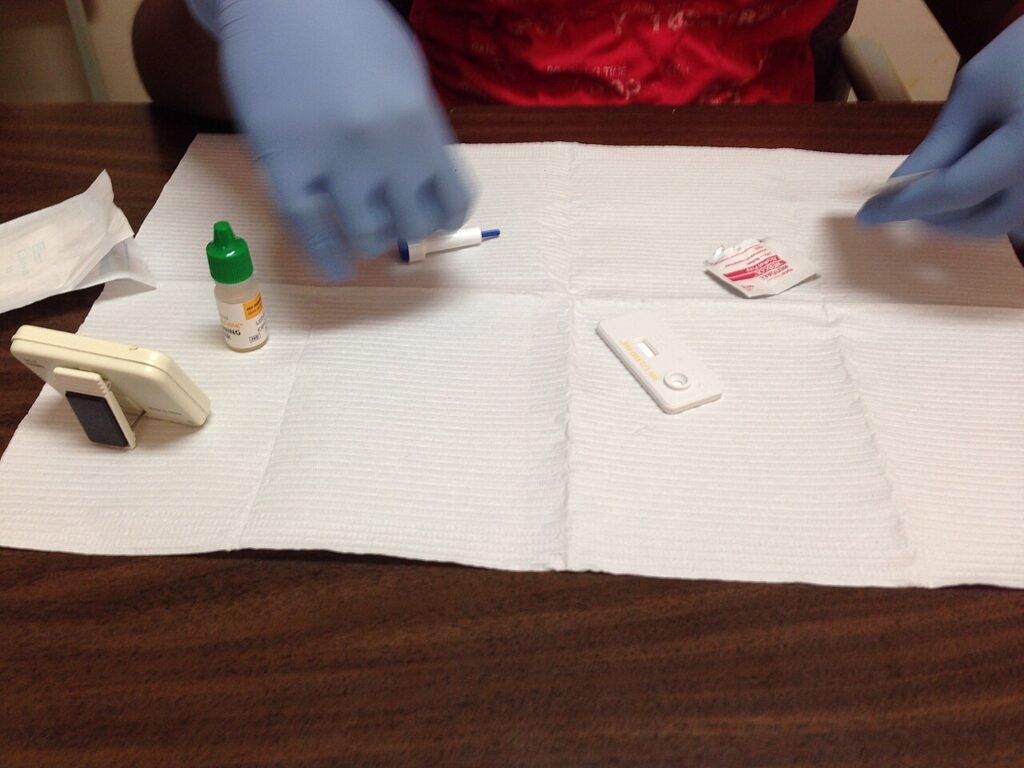
HIV (human immunodeficiency virus) attacks the body’s immune system. Without treatment it can progress to AIDS, when the immune system is so weak that serious infections and cancers develop. Today, HIV is a manageable long-term condition. People who start treatment early and take it every day can live long, healthy lives, and cannot pass the virus to their sexual partners once the virus is undetectable. Testing and treatment are available free at many centres in Nigeria.
Key facts
- HIV spreads through unprotected sex, blood, and from mother to child during pregnancy, birth or breastfeeding.
- It does not spread through touching, hugging, sharing food, toilets or mosquito bites.
- Many people have no symptoms for years. A test is the only way to know.
- Antiretroviral therapy (ART) controls the virus. Undetectable = untransmittable (U=U).
- With treatment, mothers living with HIV can have babies free of HIV.
How HIV spreads
- Vaginal or anal sex without a condom with someone who has HIV and is not on effective treatment
- Sharing needles, syringes, razors or other sharp instruments
- Unscreened blood transfusions and unsterile medical, dental, tattoo or scarification instruments
- From mother to baby during pregnancy, birth or breastfeeding, if the mother is not on treatment
Symptoms
Early infection
Two to six weeks after infection, some people have a flu-like illness: fever, sore throat, rash, swollen glands and body aches. This passes, and many people then feel well for years.
Later
Without treatment, the immune system weakens over time, leading to:
- Weight loss
- Recurrent fevers and night sweats
- Chronic diarrhoea
- Repeated infections, including thrush and shingles
- Serious infections such as tuberculosis and pneumonia
Testing
- HIV tests are quick, confidential and often free. Rapid tests give results in about 20 minutes.
- HIV self-test kits are available at some pharmacies.
- A positive self-test must be confirmed at a health facility.
- Everyone should test at least once, and more often if at risk. All pregnant women should be tested at their first antenatal visit.
Treatment
Antiretroviral therapy (ART) is a combination of medicines, often in a single daily tablet. The recommended first treatment for most adults includes dolutegravir.
- Start treatment as soon as possible after diagnosis, ideally the same day.
- Take it every day, at the same time.
- Have regular viral load tests. The goal is an undetectable viral load.
- Do not stop treatment, even if you feel well. Tell your clinic if you have side effects.
U=U: undetectable = untransmittable
People with HIV who take treatment and keep an undetectable viral load cannot pass HIV to their sexual partners. This is supported by large studies and recognised by WHO.
Preventing HIV
- Use condoms correctly every time.
- PrEP (pre-exposure prophylaxis): daily medicine for HIV-negative people at high risk, available at some centres in Nigeria.
- PEP (post-exposure prophylaxis): a 28-day course of medicine started within 72 hours of possible exposure, such as after sexual assault or a needle-stick injury. Go to a hospital immediately.
- Get tested with your partner.
- Never share needles or sharp instruments.
- Treat other sexually transmitted infections promptly.
Pregnancy and breastfeeding
Pregnant women with HIV should start or continue ART. With treatment, the risk of passing HIV to the baby is very low. Babies receive preventive medicine after birth and are tested at intervals. Mothers on effective ART can breastfeed safely; follow your clinic’s advice.
Living well with HIV
- Take your medicine every day and attend clinic visits.
- Eat well, stay active and avoid smoking and heavy drinking.
- Get screened for TB, hepatitis and cervical cancer as advised.
- Seek support. Stigma is still common, but you are not alone, and support groups can help.
When to see a doctor
Get tested if you have ever had unprotected sex, shared needles, or are pregnant. Go to a hospital within 72 hours for PEP after a possible exposure. See a doctor for weight loss, recurrent fevers, night sweats or persistent diarrhoea.
Frequently asked questions
Can HIV be cured?
There is no cure yet, but treatment controls the virus so well that people live normal lifespans.
Can I marry and have children if I have HIV?
Yes. With treatment, couples can have healthy, HIV-free children and protect partners.


