
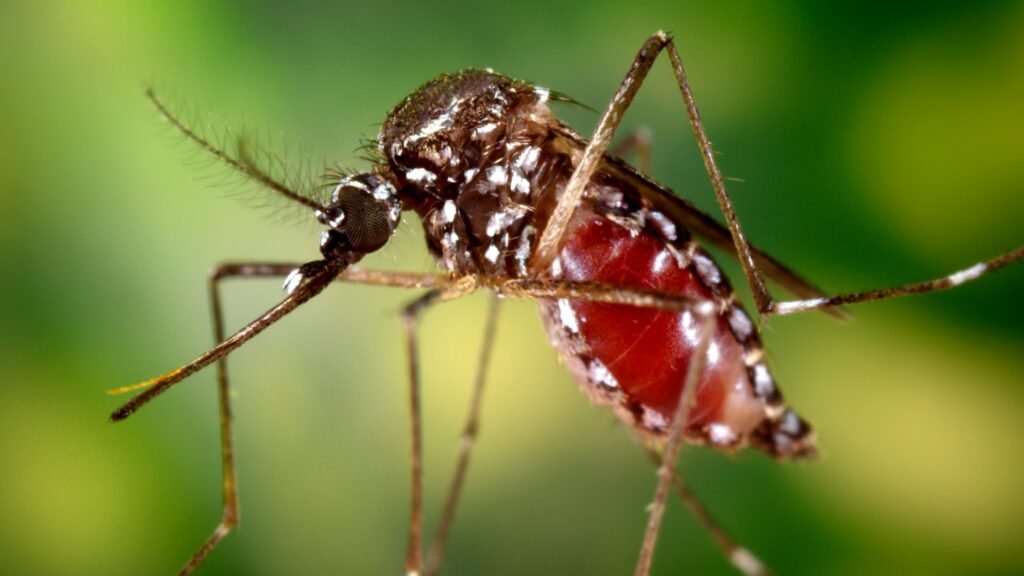
Chikungunya is a viral infection spread by the bite of infected Aedes mosquitoes, the same mosquitoes that spread dengue and Zika. It causes a sudden fever and severe joint pain that can last for weeks or months. The name comes from the Makonde language of southern Tanzania, where the disease was first described in 1952, and means “that which bends up”, describing the stooped posture of people in pain.
Key facts
- Chikungunya has been reported in more than 110 countries in Africa, Asia, Europe and the Americas.
- Symptoms start 4 to 8 days after a bite, but can appear from 2 to 12 days.
- Joint pain is often severe and can last for months in some people.
- Deaths are rare but more likely in newborns, older people and those with other illnesses.
- There is no specific treatment. Vaccines have been approved in some countries.
How it spreads
Chikungunya is spread mainly by Aedes aegypti and Aedes albopictus mosquitoes, which bite during the day, with peaks in the early morning and late afternoon. These mosquitoes breed in small collections of clean water around homes, such as water tanks, buckets, tyres and flower pots. The virus is not spread by casual contact between people, but a mother can pass it to her baby around the time of birth.
Symptoms
- Sudden high fever
- Severe joint pain, often in the hands, wrists, ankles and feet, usually on both sides of the body
- Joint swelling
- Muscle pain and headache
- Tiredness
- A rash
Most people feel better within a week, but joint pain and stiffness can continue for months, and occasionally years. Rare complications include problems with the eyes, heart, nerves and brain.
Chikungunya, dengue or malaria?
These infections can look alike. Severe joint pain points towards chikungunya, while dengue more often causes low platelet counts and bleeding. Malaria is far more common in Nigeria and must always be tested for, because it needs urgent specific treatment. A person can also have more than one infection at a time.
Diagnosis
Chikungunya is confirmed with blood tests. In the first week, RT-PCR can detect the virus itself. After that, antibody tests show recent infection.
Treatment
There is no antiviral medicine for chikungunya. Care focuses on relieving symptoms:
- Rest and drink plenty of fluids.
- Take paracetamol for fever and pain.
- Avoid aspirin and anti-inflammatory painkillers such as ibuprofen until dengue has been ruled out, because they can increase bleeding risk in dengue.
- For long-lasting joint pain, a doctor may recommend anti-inflammatory medicines, physiotherapy or, in some cases, other treatments.
Prevention
- Remove or cover standing water around the home at least once a week.
- Use insect repellent on exposed skin during the day.
- Wear long sleeves and trousers.
- Use window screens, and nets for babies and anyone sleeping in the daytime.
- If you are ill, avoid mosquito bites so you do not pass the virus to mosquitoes that could infect others.
- Vaccines against chikungunya have been approved in some countries for people at risk. Ask a health worker whether one is recommended for you.
When to see a doctor
See a health worker for any fever, so that malaria can be tested for. Seek urgent care if you have severe abdominal pain, persistent vomiting, bleeding from the gums or nose, confusion, or if a newborn baby develops fever.
Frequently asked questions
Can you get chikungunya twice?
Infection is thought to give lifelong immunity.
Why do my joints still hurt months later?
Ongoing joint pain is a known effect of chikungunya. It usually improves with time, and a doctor can help manage it.


