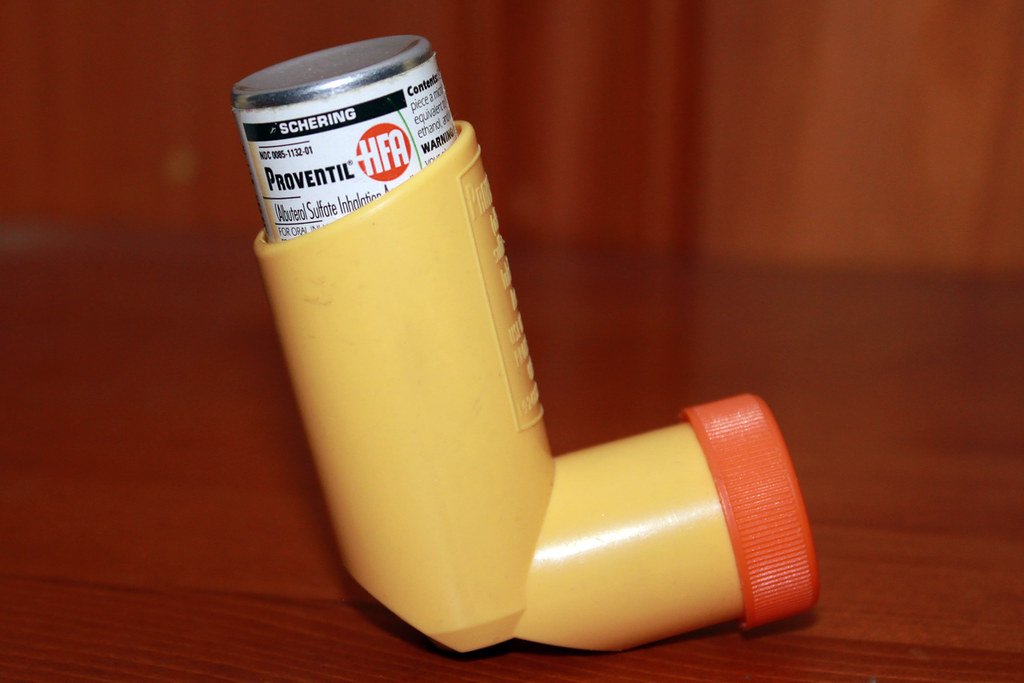
Asthma is a long-term condition in which the airways of the lungs become inflamed and narrow, making it hard to breathe. It often starts in childhood but can begin at any age. Asthma cannot be cured, but with the right inhalers and by avoiding triggers, most people can control their symptoms and live full, active lives.
Key facts
- Asthma affects hundreds of millions of people worldwide, including many children.
- Common symptoms are wheezing, coughing, chest tightness and shortness of breath.
- Inhaled steroid “preventer” medicines are the foundation of treatment.
- Most asthma deaths are preventable with good care.
- Correct inhaler technique makes a big difference.
What happens in asthma
In people with asthma, the airways are sensitive. When exposed to a trigger, the airway lining swells, muscles around the airways tighten, and extra mucus is produced. This narrows the airways and makes breathing difficult.
Common triggers
- Colds and chest infections
- Dust and dust mites
- Smoke from cigarettes, cooking fires, burning rubbish and generators
- Harmattan dust and air pollution
- Pollen and mould
- Animal fur and feathers
- Exercise, especially in cold or dry air
- Strong smells, perfumes and cleaning products
- Some medicines, such as aspirin and ibuprofen in some adults, and beta-blockers
- Strong emotions and stress
Symptoms
- Wheezing (a whistling sound when breathing)
- Shortness of breath
- Tight chest
- Coughing, often worse at night or early morning
Signs of a severe attack
- Reliever inhaler not helping
- Too breathless to speak, eat or sleep
- Fast breathing, and in children, pulling in of the skin between the ribs
- Blue or grey lips or fingertips
- Drowsiness or confusion
Diagnosis
A doctor will ask about symptoms and triggers and listen to the chest. Tests may include:
- Spirometry before and after a reliever inhaler to show airway narrowing that improves
- Peak flow monitoring at home over several weeks
- FeNO test, which measures airway inflammation, where available
Treatment
Inhalers
- Preventer inhalers contain an inhaled corticosteroid, such as budesonide or beclometasone, often combined with a long-acting bronchodilator such as formoterol. Used every day, they reduce inflammation and prevent attacks.
- Reliever inhalers quickly open the airways during symptoms. Salbutamol is the traditional reliever. Many guidelines now recommend a combination budesonide-formoterol inhaler as a reliever, because it treats inflammation at the same time.
Needing your reliever more than twice a week is a sign your asthma is not well controlled. See your health worker.
Using your inhaler correctly
- Shake the inhaler and remove the cap.
- Breathe out gently, away from the inhaler.
- Put the mouthpiece between your lips, or attach it to a spacer.
- Press once as you start to breathe in slowly and deeply.
- Hold your breath for about 10 seconds, then breathe out slowly.
- Wait 30 to 60 seconds before a second puff.
- Rinse your mouth after using a steroid inhaler.
A spacer makes inhalers work better and is recommended for children and many adults. Ask a nurse or pharmacist to check your technique.
Other treatments
Tablets such as montelukast, steroid tablets for severe attacks, and specialist biologic injections for severe asthma may be used.
Asthma action plan
Ask your health worker for a written asthma action plan that tells you which medicines to take every day, how to recognise worsening asthma, and what to do in an attack.
What to do in an asthma attack
- Sit up straight and try to stay calm.
- Take one puff of your reliever inhaler every 30 to 60 seconds, up to 10 puffs, using a spacer if you have one.
- If you do not feel better, or you are worried at any time, go to the emergency department immediately.
- If help has not arrived after 10 minutes, repeat step 2.
Living well with asthma
- Take your preventer every day, even when you feel well.
- Avoid smoke, and do not allow smoking in the home.
- Use cleaner cooking fuels or cook in well-ventilated spaces.
- Reduce dust at home, and wear a mask during harmattan if dust triggers your asthma.
- Get the flu vaccine where available.
- Stay active. Take your reliever before exercise if advised.
When to see a doctor
See a health worker if you think you or your child may have asthma, if you need your reliever more than twice a week, or if asthma wakes you at night. Seek emergency care for any sign of a severe attack.
Frequently asked questions
Are inhaled steroids safe?
Yes. Inhaled steroids are given in very small doses directly to the lungs and are safe for long-term use in children and adults.
Will my child grow out of asthma?
Some children’s asthma improves as they grow, but it can return later. Keep using treatment as advised.