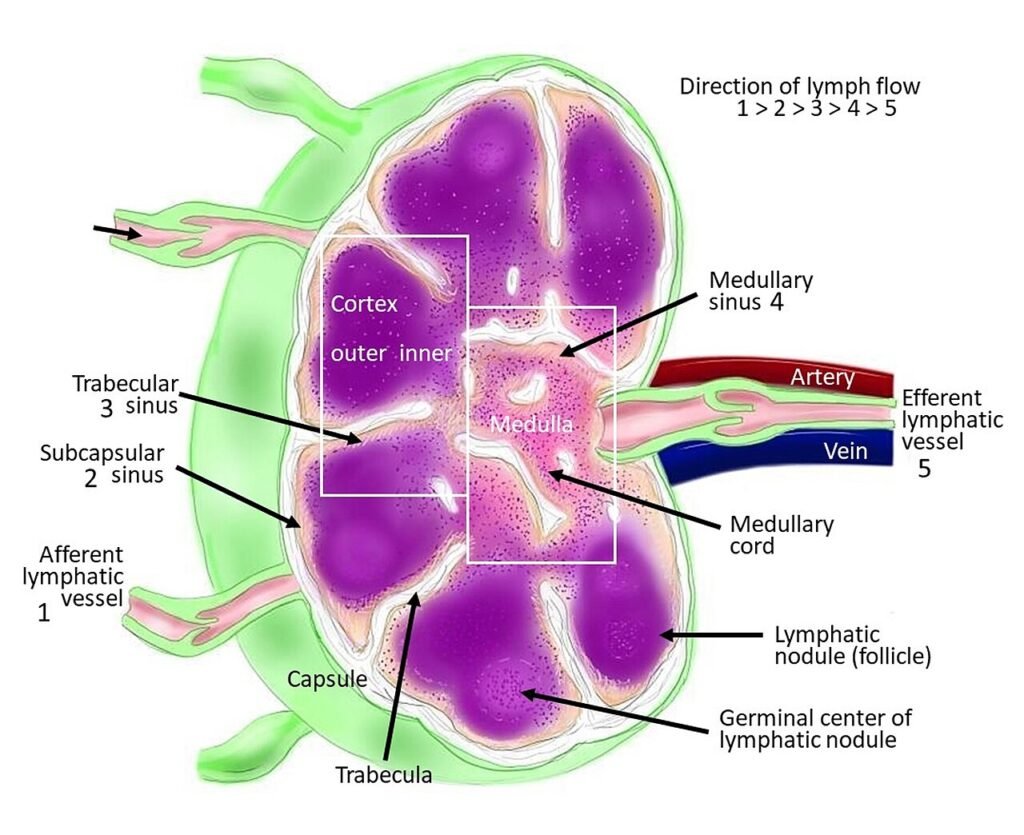
The lymphatic system is a network of vessels, nodes and organs that carries a clear fluid called lymph around the body. It drains excess fluid from tissues back into the blood, absorbs fat from the gut, and plays a central role in fighting infection. Most people only notice it when their “glands” swell during an illness.
Key facts
- The body has around 600 lymph nodes, clustered in the neck, armpits, groin, chest and abdomen.
- Lymph nodes filter lymph and contain white blood cells that fight infection.
- Swollen lymph nodes are usually a sign of a common infection and settle within a few weeks.
- When lymph drainage is blocked, swelling called lymphoedema can develop.
- Cancers of the lymphatic system are called lymphomas.
Parts of the lymphatic system
- Lymph: fluid that leaks out of blood vessels into the tissues and carries white blood cells, proteins and waste.
- Lymphatic vessels: thin tubes that collect lymph and carry it towards the heart, where it rejoins the blood.
- Lymph nodes: bean-shaped filters along the vessels that trap germs and abnormal cells.
- Spleen: an organ on the upper left of the abdomen that filters blood and stores white blood cells.
- Thymus: a gland in the chest where T cells, a type of white blood cell, mature during childhood.
- Tonsils and adenoids: lymphatic tissue at the back of the throat and nose that helps catch germs entering the body. See our guide to tonsillitis.
- Bone marrow: where white blood cells, including lymphocytes, are made.
What the lymphatic system does
- Balances fluid: it returns about 2 to 3 litres of fluid a day from the tissues to the bloodstream, which prevents swelling.
- Fights infection: lymphocytes in the nodes recognise germs and make antibodies against them.
- Absorbs fat: special lymph vessels in the small intestine absorb fats and fat-soluble vitamins from food.
Common problems
Swollen lymph nodes
Swollen, tender nodes in the neck during a cold or sore throat are very common and usually go down within two weeks. Other causes include skin infections, tuberculosis, HIV and, less often, cancer.
Lymphoedema
Lymphoedema is long-term swelling, usually in an arm or leg, caused by damaged or blocked lymph drainage. It can follow cancer surgery or radiotherapy that removes or damages lymph nodes, or be present from birth. Treatment includes skin care, exercise, compression garments and special massage.
Lymphatic filariasis (elephantiasis)
This tropical infection is caused by parasitic worms spread by mosquitoes. The worms live in lymph vessels and can cause severe swelling of the legs or scrotum. Nigeria has one of the largest burdens in the world, and mass drug administration programmes and mosquito nets are used to eliminate it.
Lymphoma
Lymphomas are cancers that start in lymphocytes. The main types are Hodgkin and non-Hodgkin lymphoma. Warning signs include painless, growing lymph nodes, fever, drenching night sweats and unexplained weight loss. Read our guide to cancer warning signs.
Infections of lymph vessels
Lymphangitis is a bacterial infection of lymph vessels, often from a wound, that causes red streaks spreading up the skin with fever. It needs prompt antibiotic treatment.
Keeping your lymphatic system healthy
- Stay active. Muscle movement helps pump lymph through the vessels.
- Maintain a healthy weight, since obesity can strain lymph drainage.
- Clean and care for cuts and skin wounds to prevent infection.
- Sleep under a mosquito net to prevent filariasis and malaria.
- If you have had lymph nodes removed, protect that arm or leg from cuts, burns and tight clothing.
When to see a doctor
See a doctor if a lymph node is larger than about 1 cm and has not gone down after 2 to 3 weeks, feels hard or fixed, or keeps growing. Also get checked if swollen nodes come with night sweats, fever or weight loss, or if an arm or leg becomes persistently swollen. Seek urgent care for red streaks spreading from a wound with fever.
Frequently asked questions
Are lymph nodes and glands the same thing?
People often call lymph nodes “glands”, but they are not true glands because they do not make hormones.
Does lymphatic massage detox the body?
Specialist lymphatic drainage massage helps people with lymphoedema. There is no good evidence that it removes “toxins” in healthy people.