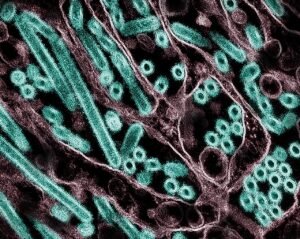
Nipah virus is a rare but serious infection that passes from animals to people. Its natural hosts are fruit bats of the Pteropus family. Outbreaks have occurred mainly in Bangladesh, India, Malaysia and Singapore, and the illness can range from no symptoms to fatal brain swelling. WHO lists Nipah as a priority disease for research because it can be deadly and there is no vaccine yet.
Key facts
- Nipah was first identified during an outbreak among pig farmers in Malaysia in 1998 to 1999.
- Fruit bats carry the virus and can contaminate fruit and raw date palm sap.
- It can spread from person to person through close contact with body fluids.
- WHO estimates the fatality rate at 40% to 75%, depending on the outbreak and local care.
- There is no approved vaccine or specific treatment.
How Nipah virus spreads
- From animals: through direct contact with infected pigs or bats, or their body fluids.
- From contaminated food: in Bangladesh and India, many infections have been linked to drinking raw date palm sap or eating fruit contaminated with bat saliva or urine.
- From person to person: through close contact with the saliva, respiratory secretions, urine or blood of an infected person. Family caregivers and health workers are at particular risk.
Symptoms
The incubation period is usually 4 to 14 days, but can occasionally be longer.
Early symptoms
- Fever and headache
- Muscle pain
- Vomiting
- Sore throat
Severe symptoms
- Dizziness, drowsiness and confusion
- Signs of brain inflammation (encephalitis)
- Breathing problems, including severe pneumonia
- Seizures, progressing to coma within 24 to 48 hours in severe cases
Some survivors have long-term effects, such as seizures or personality changes, and in rare cases the infection can flare up again months or years later.
Diagnosis
Early symptoms are not specific, so diagnosis depends on a history of possible exposure during an outbreak. The infection is confirmed by laboratory tests such as RT-PCR on throat swabs, spinal fluid, urine or blood. Because of the risk to staff, samples are handled in specialist laboratories.
Treatment
There is no specific medicine for Nipah virus infection. Patients are cared for in isolation with intensive supportive care, which includes managing breathing, seizures and brain swelling. Several experimental treatments, including monoclonal antibodies, are being studied.
Prevention
- Avoid drinking raw date palm sap. Boiling fresh sap kills the virus.
- Wash and peel fruit before eating, and throw away fruit with signs of bat bites.
- Avoid contact with sick pigs and bats in areas where Nipah occurs.
- When caring for someone with suspected Nipah, avoid direct contact with body fluids, use gloves and masks, and wash hands often.
- Health workers should use strict infection control with all patients who have suspected Nipah.
Several vaccines are in development, supported by global health research programmes.
Is Nipah a risk in Nigeria?
No human cases of Nipah virus have been reported in Africa. However, fruit bats that carry related viruses live across Africa, which is why scientists continue to monitor bat populations. The prevention habits above, such as washing fruit and avoiding contact with bats, also protect against other infections.
When to see a doctor
If you develop fever with headache, confusion or breathing difficulty after travelling to an area with a Nipah outbreak, or after contact with a suspected case, seek medical care immediately and tell the health worker about your travel and contacts.
Frequently asked questions
Can Nipah virus cause a pandemic?
So far, person-to-person spread has been limited to close contacts. Scientists watch closely for changes because the virus is deadly and has no vaccine.
Is Nipah related to other viruses?
Yes. It belongs to the same group as Hendra virus, found in Australia, which also comes from fruit bats.